Dynamic Complex Systems and Emergence
When dynamic elements in a system interact with other dynamic elements, they generate positive feedback loops. Qualitatively different and often surprising new phenomena emerge as a result.
Unexpected behavior emerges by the continued action of positive
feedback in adaptive complex systems. This sort of phenomenon is
ever present in nature (see some examples
here).
They
are also common in systems created by humans. Consider
microphone
feedback squeals. We all have heard a loud
squeal from a speaker when the microphone gets too close to the
speaker
or the amplifier gain is too high. The positive feedback occurs
because
the initial sound picked up by the microphone is amplified, sent
out
through the speaker and returns to the microphone louder than
the
original sound. A
few cycles of this feedback loop generates a loud squeal. Once
you
understand the mechanism, it seems unremarkable and
controllable. To
kill the squeal, simply move the microphone farther from the
speaker or
turn down the amplifier gain, thereby reducing the intensity of
the
amplified sound that reaches the microphone.
As a thought experiment, consider a large open space, say a football field, on which a hundred speakers, amplifiers and microphones are placed randomly. Add connections (wires), one at a time, between a randomly chosen microphone and amplifier or randomly chosen amplifier and speaker[1]. Sooner or later, a squeal will arise because a speaker happens to be close enough to the microphone that feeds it. Let us call that microphone-amplifier-speaker trio an autocatalytic set, i.e., a self-reinforcing set of elements that produce an emergent property of the system (the squeal). Adding more wires will create a second squeal, and a third, and so on. There tends to be a threshold beyond which new feedback loops are created very rapidly and shortly thereafter nearly all the speakers will be emitting squeals. Since the output of any given speaker reaches more than one microphone, some of the autocatalytic sets (i.e., feedback loops) may involve multiple microphones, amplifiers, or-speakers. Likewise, a given speaker or microphone may be participating in more than one autocatalytic set, i.e., emitting multiple squeals at various pitches (because the pitch depends upon the distance between the participating speaker and microphone).
In 1965, Stuart Kauffman did computer simulation experiments analogous to the speakers on the football field using random Boolean nets. The simulations showed, to his surprise, that autocatalytic sets (called state cycles in these Boolean nets) inevitably emerge quickly. The number of autocatalytic sets that emerge is roughly the square root of the number of elements in the Boolean network [2]. Mutually reinforcing feedback loops form in all sorts of complex systems. The probability that at least one autocatalytic set will emerge increases as more elements are added to the system, more interconnections are added, or the elements themselves become more complex and therefore can interact with others in more complex ways. In other words, any change to the system that increases the number of possible positive feedback loops increases the probability that an autocatalytic set will emerge. How big does a system have to be before feedback loops become nearly inevitable? It tuns out that it depends upon how complex their interactions are and how many other elements each interacts with. In general, the simpler the elements and their interactions, the more of them are needed to give a high probability of emergence.
Consider two familiar examples of emergent systems in human affairs:
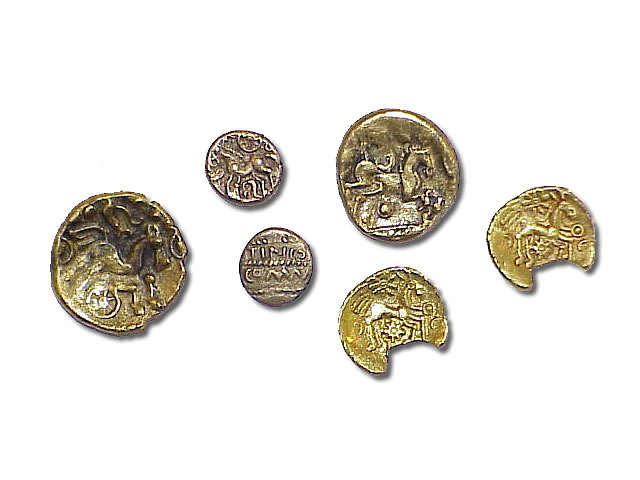 Money -- Cattle, wheat,
chunks of
metal or cowrie
shells were used as tokens of trade at least as early as 3000 BC
and
perhaps as early as 9000 BC. But such tokens
became far more useful once they were visibly distinct, had
agreed upon
values, and were under the imprimatur of an
authority. Coins of different values -- due to different
metal
composition, e.g., gold and silver, emerged
between
650BC and 550BC in Lydia. As the benefits
of money were recognized by more people, more coins were minted
which,
in turn, allowed those
benefits to be experienced by more and more traders. Within two
hundred
years, the idea of using coins with specific values had been
adopted
throughout the Mediterranean region. China had developed coins
as well.
Coins changed commerce forever. Counterfeiting and
debasement
of the metals in the coins soon emerged. Increases in the rate
at which coins were minted (or counterfeited) created early
cases of inflation. When there
are more coins
than needed to purchase goods in a given economy, the price of
the
goods rises. Thus there emerges a metalevel dynamic relationship
between the total money
supply and the total demand for goods. In hindsight,
however, the bigger effect of
coinage was to
generate the notion of price.
A price is a numeric quantity -- a
number -- that can be printed on paper currency, added and
subtracted, and entered in accounting books. Eventually, when
accounting
became computerized, prices became just the bits that describe
the
number. Bits can move at electronic speeds in world-wide
financial markets that change in milliseconds due to the
positive
feedback of greed or fear generated by the price moves
themselves. Many
financial
instruments have become no more than abstract "baskets" of
abstract
"bets" such as "futures" and other more arcane "derivatives"
that can
bankrupt organizations and markets in a flash: witness the "Flash
Crash"
that occurred at 2:45pm, May 6, 2010. So emergent
metalevel upon
emergent metalevel, human commerce grew from cowrie shells to
Synthetic Collateralized Debt Obligations
and "Swaps". My oh my!
Money -- Cattle, wheat,
chunks of
metal or cowrie
shells were used as tokens of trade at least as early as 3000 BC
and
perhaps as early as 9000 BC. But such tokens
became far more useful once they were visibly distinct, had
agreed upon
values, and were under the imprimatur of an
authority. Coins of different values -- due to different
metal
composition, e.g., gold and silver, emerged
between
650BC and 550BC in Lydia. As the benefits
of money were recognized by more people, more coins were minted
which,
in turn, allowed those
benefits to be experienced by more and more traders. Within two
hundred
years, the idea of using coins with specific values had been
adopted
throughout the Mediterranean region. China had developed coins
as well.
Coins changed commerce forever. Counterfeiting and
debasement
of the metals in the coins soon emerged. Increases in the rate
at which coins were minted (or counterfeited) created early
cases of inflation. When there
are more coins
than needed to purchase goods in a given economy, the price of
the
goods rises. Thus there emerges a metalevel dynamic relationship
between the total money
supply and the total demand for goods. In hindsight,
however, the bigger effect of
coinage was to
generate the notion of price.
A price is a numeric quantity -- a
number -- that can be printed on paper currency, added and
subtracted, and entered in accounting books. Eventually, when
accounting
became computerized, prices became just the bits that describe
the
number. Bits can move at electronic speeds in world-wide
financial markets that change in milliseconds due to the
positive
feedback of greed or fear generated by the price moves
themselves. Many
financial
instruments have become no more than abstract "baskets" of
abstract
"bets" such as "futures" and other more arcane "derivatives"
that can
bankrupt organizations and markets in a flash: witness the "Flash
Crash"
that occurred at 2:45pm, May 6, 2010. So emergent
metalevel upon
emergent metalevel, human commerce grew from cowrie shells to
Synthetic Collateralized Debt Obligations
and "Swaps". My oh my!
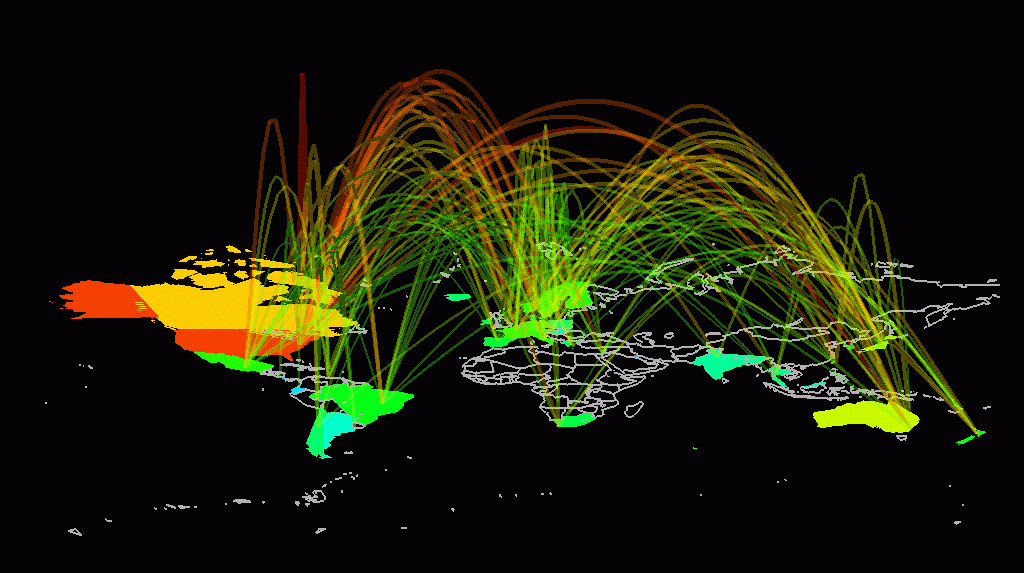 The Internet
--
In computing, TCP/IP and HTTP protocols create new sorts of
interactions between computers. The Internet emerged from TCP/IP
protocols and
the Web emerged from HTTP protocols.
The communication infrastructure of these sorts of systems grows
because of positive feedback
known as the “network effect.” That is, as the network grows it
becomes
more attractive for others to join the network. Telephones and
fax
machines are the usual example of prototypical positive feedback
network effects. On top of the base communication networks,
content and
usage models proliferate easily because when bits are "free"
both in
the sense of "free beer" and "free speech," innovative startups
have
very low costs of entry. Google and Facebook could start
in
dorm rooms. Blogs and Twitter communities appear out of
nowhere.
Less welcome but just as much emergent phenomena are the myriads
of
viruses, worms and other malware that exploit email, blogs, and
Web
content to support all sorts of scams and cyber-crime.
The Internet
--
In computing, TCP/IP and HTTP protocols create new sorts of
interactions between computers. The Internet emerged from TCP/IP
protocols and
the Web emerged from HTTP protocols.
The communication infrastructure of these sorts of systems grows
because of positive feedback
known as the “network effect.” That is, as the network grows it
becomes
more attractive for others to join the network. Telephones and
fax
machines are the usual example of prototypical positive feedback
network effects. On top of the base communication networks,
content and
usage models proliferate easily because when bits are "free"
both in
the sense of "free beer" and "free speech," innovative startups
have
very low costs of entry. Google and Facebook could start
in
dorm rooms. Blogs and Twitter communities appear out of
nowhere.
Less welcome but just as much emergent phenomena are the myriads
of
viruses, worms and other malware that exploit email, blogs, and
Web
content to support all sorts of scams and cyber-crime.
I tis important to note that complex dynamic feedback gives rise to emergent entities that are qualitatively different from those of the underlying elements. A marketplace based upon money is qualitatively different from one based upon barter because easily communicable prices create relationships between all goods and services and anything can be given a price. More specialized goods and services can participate on an equal footing with everyday commodities. So too, the emergent behavior called the Web is dramatically different from communities that swap files by FTP even though the low-level technical differences between FTP and HTTP are relatively minor.
[1] Note: since this is an abstract thought experiment, we allow multiple microphones to feed the same amplifier, a microphone to feed multiple amplifiers, and an amplifier to feed multiple speakers. We also ignore the likelihood that, in real life, amplifiers may blow fuses and speakers may shred themselves.
[2] See Chapter two of Complexity: Life at the edge of chaos, by Roger Lewin, 1992l, Macmillan Publishing Co. For an informal discussion. Stephen Kauffman has developed the formal theory, known as NK Systems. See S. A. Kauffman. The Origins of Order: Self-Organization and Selection in Evolution, Oxford University Press, New York, 1993.
Contact: sburbeck at mindspring.com
Last revised 8/6/2013